
Blue Mosque, Hagia Sophia & Basilica Cistern Guided Tour with Tickets
 +8
+8
About this tour
This guided tour pairs Hagia Sophia with two of its Sultanahmet neighbors, the Blue Mosque and the underground Basilica Cistern, with a local guide leading the way and skip-the-line entry at each stop. Inside Hagia Sophia you'll see the great central dome, Byzantine mosaics, and Islamic calligraphy sharing one space, still in use today as a working mosque. Entrance tickets are included, and modest dress is required since it remains an active place of worship.
Highlights
- See Byzantine and Ottoman architecture layered together over nearly 1,500 years
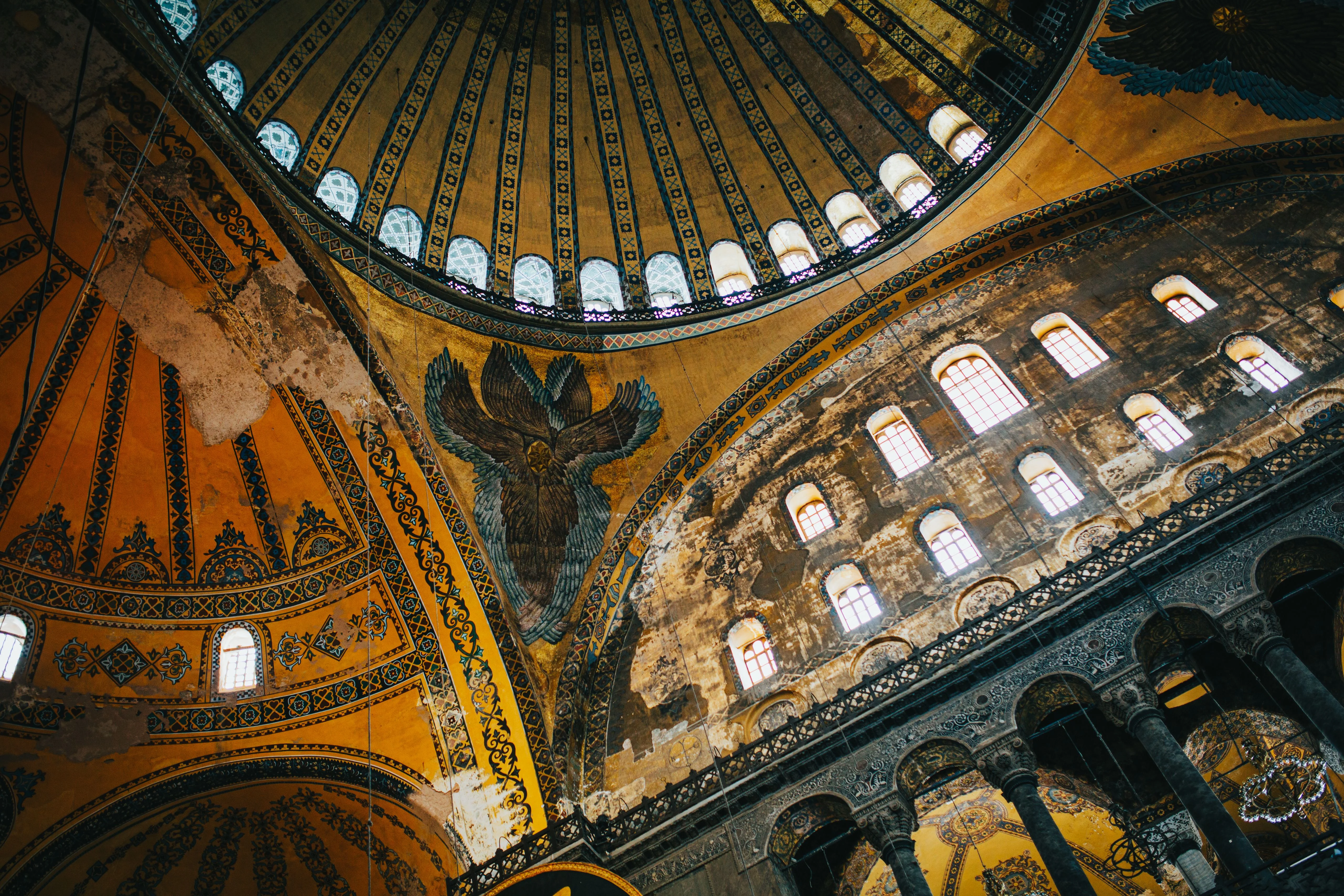
- Stand beneath the vast central dome, an engineering feat far ahead of its time
- Spot Byzantine mosaics and Islamic calligraphy sharing the same walls
- Visit a working mosque still open to both worshippers and travelers
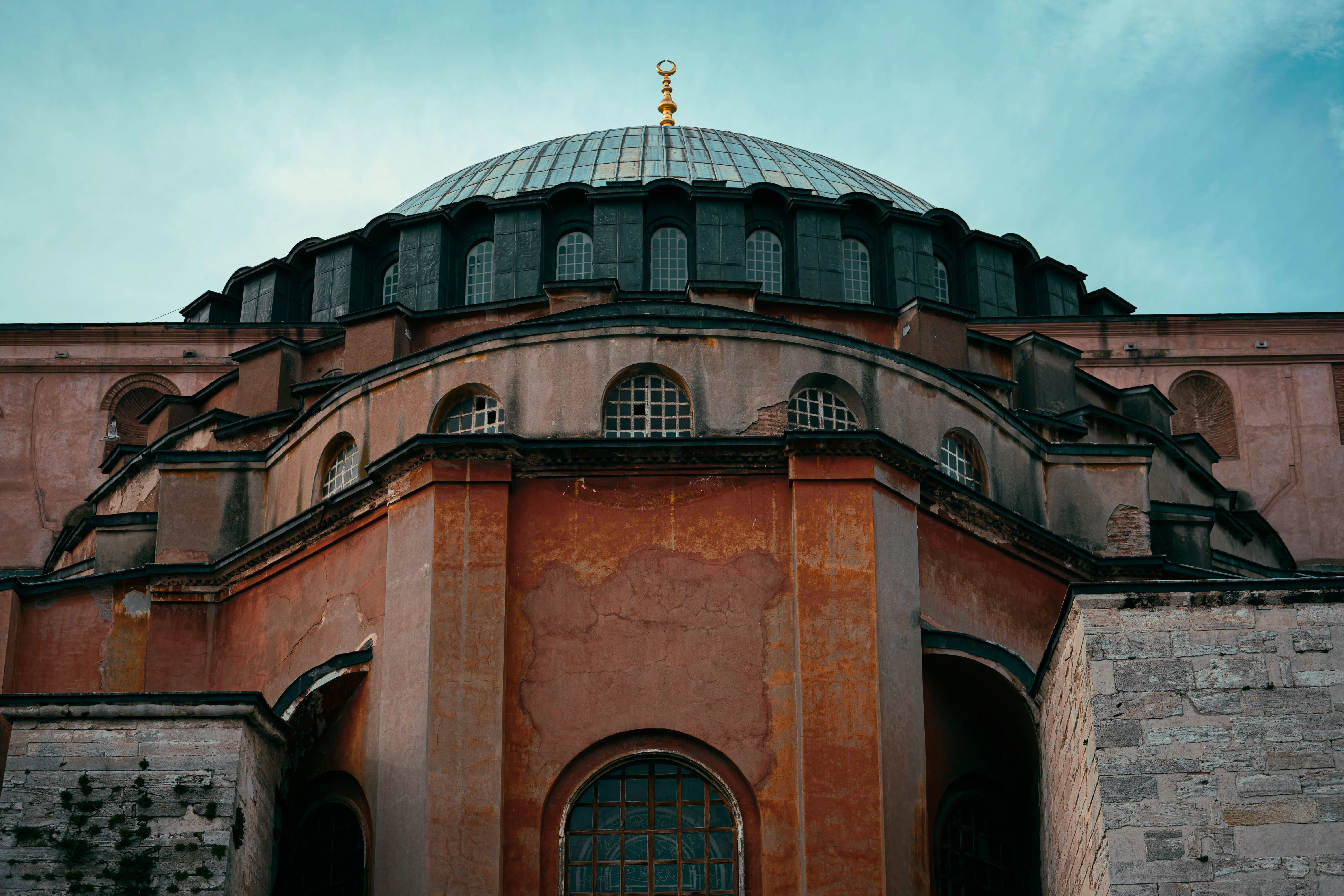
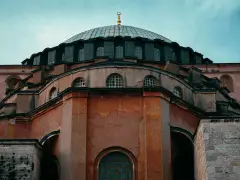
- Hagia Sophia's massive central dome, an engineering feat of the 530s that still seems to float above the hall with no visible support
- Byzantine gold mosaics hanging alongside the giant Ottoman calligraphy panels, the layered Christian-then-Muslim history in one room
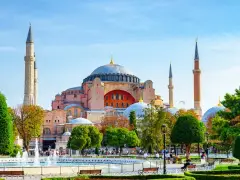
- A prime spot on Sultanahmet Square, facing the Blue Mosque and a short walk from the Basilica Cistern and Topkapi Palace
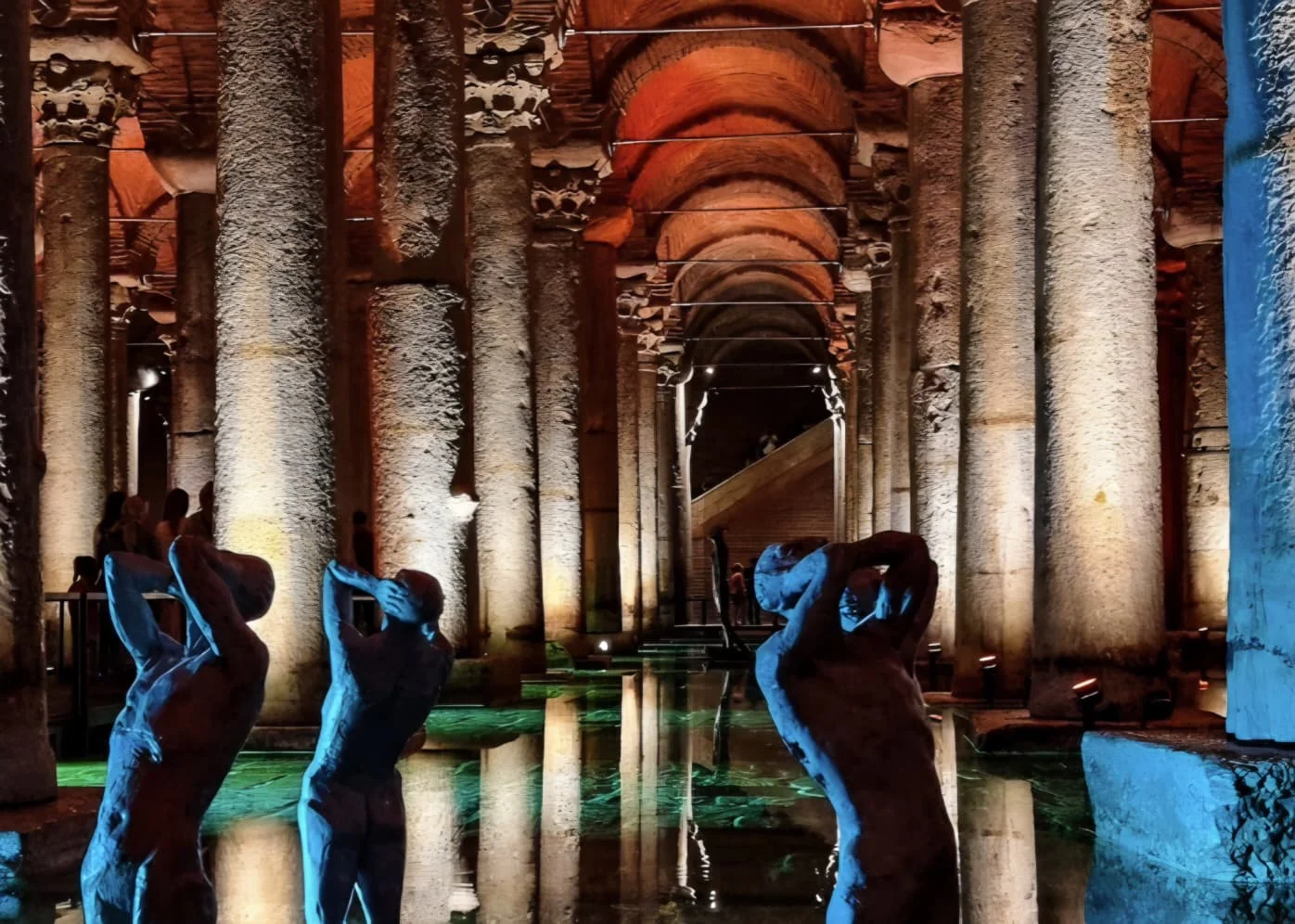
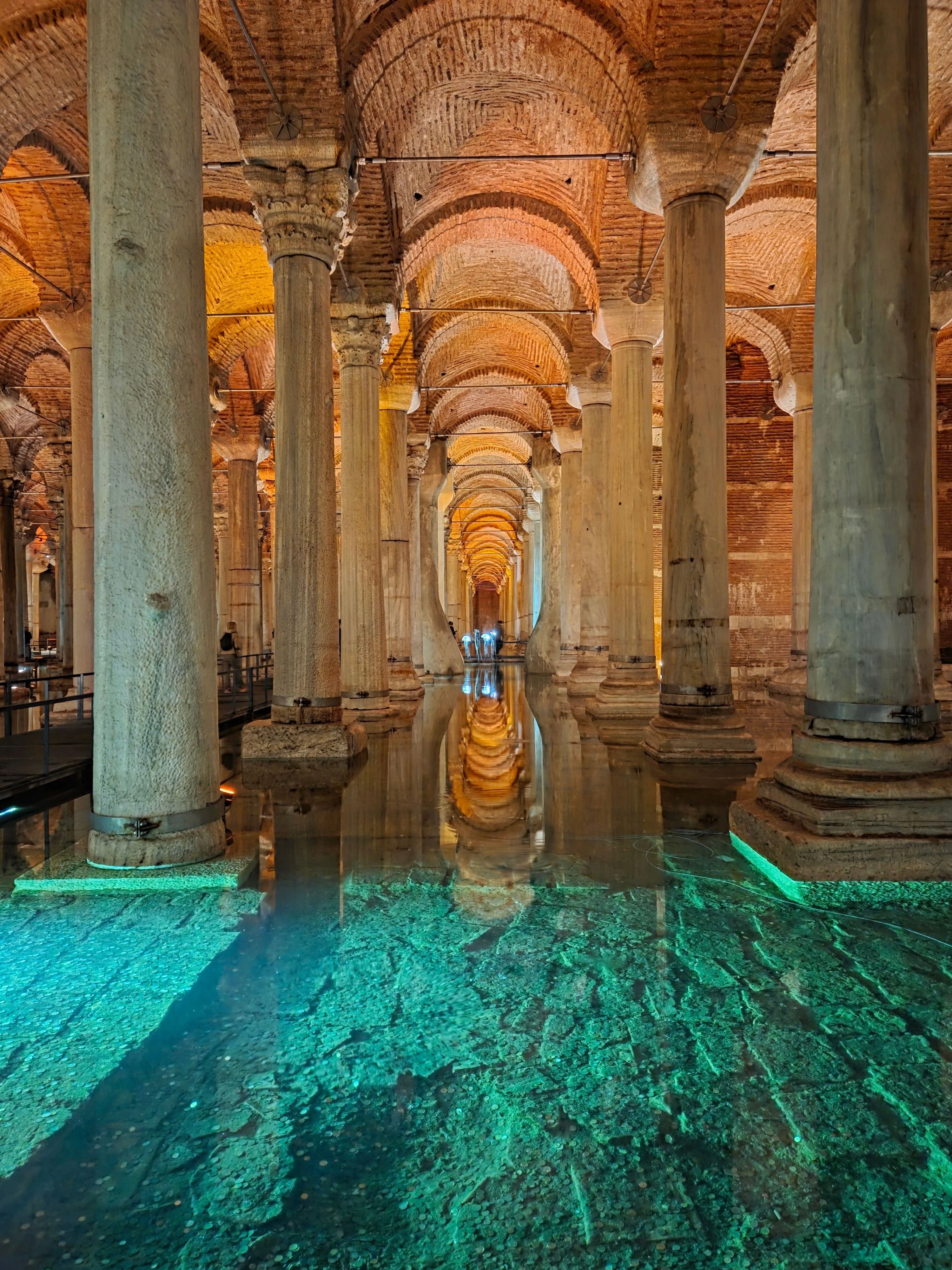
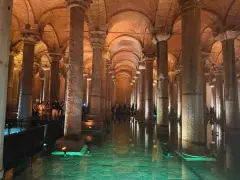
- Hundreds of marble columns rising from shallow water in a vast 6th-century underground hall, lit low so the reflections stretch out
- The two carved Medusa-head column bases at the far end, one set on its side and the other upside down, with no one quite sure why
- Cool, quiet air below street level, a genuine break from the heat and crowds of Sultanahmet above
- Over 20,000 hand-painted Iznik tiles in blues and greens lining the walls, the source of the Blue Mosque's nickname
- Six minarets giving the mosque a silhouette unlike any other Ottoman mosque of its era
- A working mosque facing Hagia Sophia across an open square, the two buildings in a centuries-long architectural conversation
Included / Excluded
- Guided tour of the Blue Mosque, Hagia Sophia, and Basilica Cistern
- Skip-the-line entry at every site
- Local guide
- Entrance tickets
Good to Know Before You Visit Hagia Sophia
Hagia Sophia is open daily from 09:00 to 19:00, with the last entry at 18:30. Because it's a working mosque, the building fully closes to visitors during each of the five daily prayers, usually for about 75 to 90 minutes at a time. The longest closure is Friday midday, from 12:30 to 14:30, when the space is given over to the main weekly prayer. Any time outside those windows, you're free to walk through and take it in.
A modest dress code applies to everyone. Women need a skirt at knee length or longer, or full-length pants, with shoulders and arms covered and a headscarf worn inside. Men should wear full-length pants or knee-length shorts, and sleeveless shirts aren't allowed. The rules are eased for children under eight.
Available Days / Times
- Monday : 10:00, 11:00, 14:00
- Tuesday : 10:00
- Wednesday : 10:00, 11:00, 14:00
- Thursday : 10:00, 11:00, 14:00
- Friday : 10:00, 14:00
- Saturday : 10:00, 11:00, 14:00
- Sunday : 10:00, 11:00, 14:00
You Might Also Like
See all tours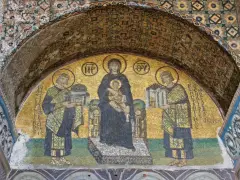
Basilica Cistern, Hagia Sophia & Blue Mosque Tickets with Audio Guide
Istanbul Old City Half-Day Guided Morning Tour
Blue Mosque & Hagia Sophia Guided Tour with Skip the Line Tickets
Istanbul Old City Full-Day Guided Tour

Topkapi Palace & Harem Guided Tour with Hagia Sophia, Blue Mosque
Hagia Sophia and Basilica Cistern Tickets with Audio Guide
Basilica Cistern & Hagia Sophia Combo Tickets with Audio Guide
Hagia Sophia, Topkapi Palace & Basilica Cistern Ticket with Audio Guide
Important Information
- Active mosque, so dress respectfully (see dress code)
- Your ticket covers the Upper Gallery visiting area; the ground-floor prayer hall is for worshippers only
- Closed to tourists during the five daily prayers and Friday midday prayer; plan around these
- Security screening at entry; waits can reach 60 minutes in peak season (June to August)
- Set aside 1 to 2 hours to take in the architecture and history
- A guide or audio guide adds context on the history, symbolism, and artwork
- Ongoing conservation work may leave parts of the interior behind scaffolding
- Combo tickets save time and money if you also visit the Basilica Cistern and Topkapi Palace
- Remove shoes before the prayer area; use the racks or carry them in a small plastic bag
- Keep quiet and respectful inside the mosque
- Photography is generally fine, but no flash
- Follow directions from mosque staff and guides
FAQs
What is Hagia Sophia?
When was Hagia Sophia built?
Who built Hagia Sophia?
Who designed Hagia Sophia?
What does Hagia Sophia mean?
Why is Hagia Sophia important?
Where is Hagia Sophia located?
Is Hagia Sophia free to visit?
Where can I buy Hagia Sophia tickets?
How do you pronounce Hagia Sophia?
Is Hagia Sophia a mosque or a museum?
Where do tourists enter Hagia Sophia?
Is there a dress code at Hagia Sophia?
How long should I plan to spend at Hagia Sophia?
What was the Basilica Cistern used for?
What are the Medusa heads in the Basilica Cistern?
How long does a visit to the Basilica Cistern take?
What should I wear on my feet at the Basilica Cistern?
Is there an admission charge for the Blue Mosque?
When is the Blue Mosque closed to tourists?
What is the dress code at the Blue Mosque?
Why is it called the Blue Mosque?
Similar tours
Basilica Cistern, Hagia Sophia & Blue Mosque Tickets with Audio Guide
Hagia Sophia and Basilica Cistern Tickets with Audio Guide
Basilica Cistern & Hagia Sophia Combo Tickets with Audio Guide
Topkapi Palace & Harem Guided Tour with Hagia Sophia, Blue Mosque