Theodosius Cistern (Serefiye Cistern)
Tours & Tickets for Theodosius Cistern (Serefiye Cistern)
About Theodosius Cistern (Serefiye Cistern)
The Theodosius Cistern, also called the Serefiye Cistern, is an underground Byzantine water reservoir near Sultanahmet, in Istanbul's old city. It was built in the early Byzantine period, during the reign of Emperor Theodosius II in the 5th century, as part of the system that stored and distributed water across Constantinople. For centuries it sat largely forgotten beneath the streets, and it only opened to the public relatively recently after a long restoration, so it tends to be far quieter than the better-known Basilica Cistern a short walk away.
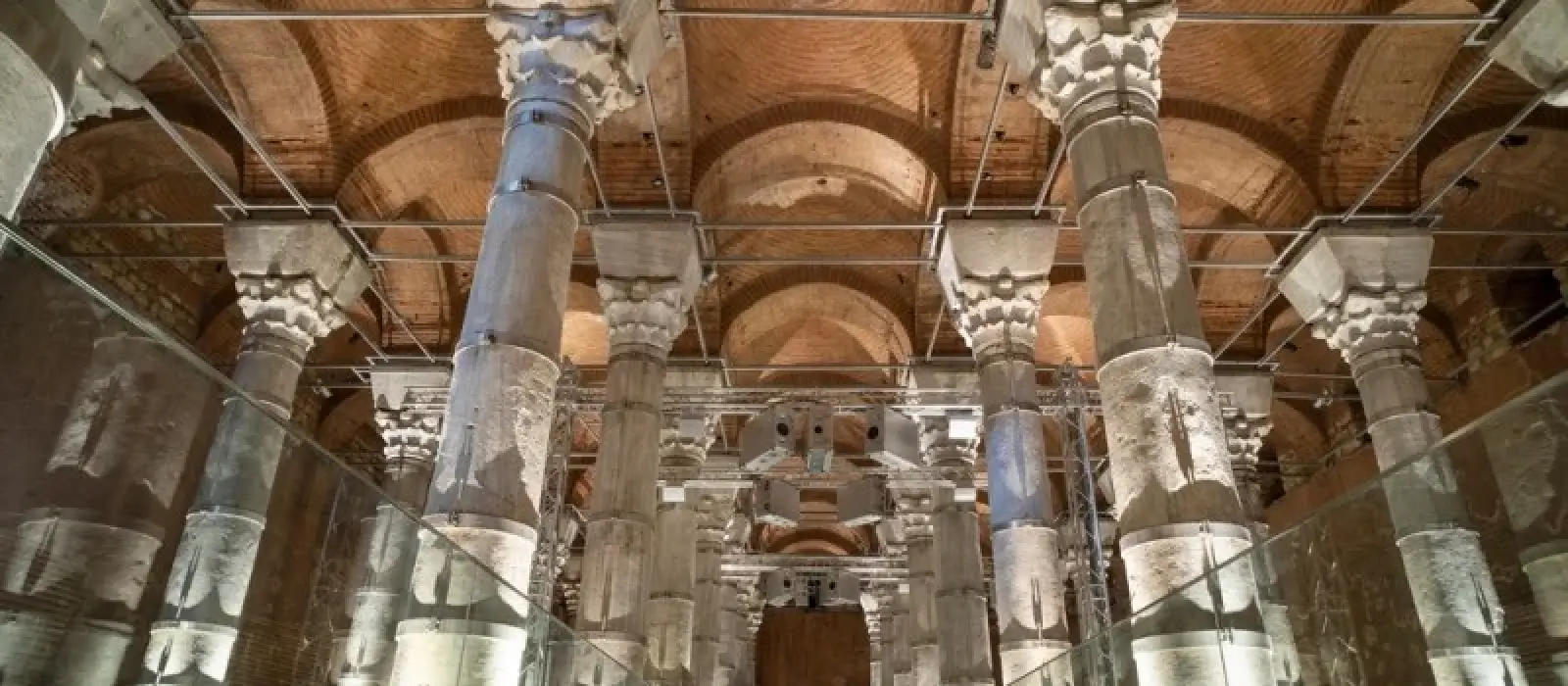
Inside, the space is what you'd expect from a Roman-era cistern: rows of tall marble columns holding up brick vaulted arches, with soft lighting reflecting off the floor. It's cool and hushed down there, which makes it an easy break from the heat and crowds above ground. The cistern also doubles as a cultural venue and sometimes hosts light-and-sound displays and temporary exhibitions projected onto the columns and walls, so the exact experience can vary depending on what's running when you visit.
Getting here is straightforward. It sits close to Sultanahmet Square, within walking distance of Hagia Sophia, the Blue Mosque, and the Basilica Cistern, so it slots neatly into a day spent in the historic peninsula. A visit is short, usually well under an hour, since it's a single underground chamber rather than a sprawling site. Entry is a separate paid ticket, and an audio guide is available that covers the cistern's history and how it once supplied the city with water. Because current opening arrangements and any exhibitions can change, it's worth checking before you go.