
Hierapolis Ancient City
Tours & Tickets for Hierapolis Ancient City
Pamukkale & Hierapolis Skip the Line Ticket with Audio Guide
Pamukkale Hot Air Balloon Ride with Hotel Transfer

Pamukkale Hot Air Balloon Ride: 1-Hour Sunrise Flight

Pamukkale Hot Air Balloon Ride at Sunrise, 1-Hour Flight

Pamukkale & Hierapolis Guided Day Tour from Antalya with Lunch

Pamukkale Day Tour with Hierapolis & Lunch
Pamukkale & Hierapolis Day Tour from Kusadasi/Selcuk
About Hierapolis Ancient City
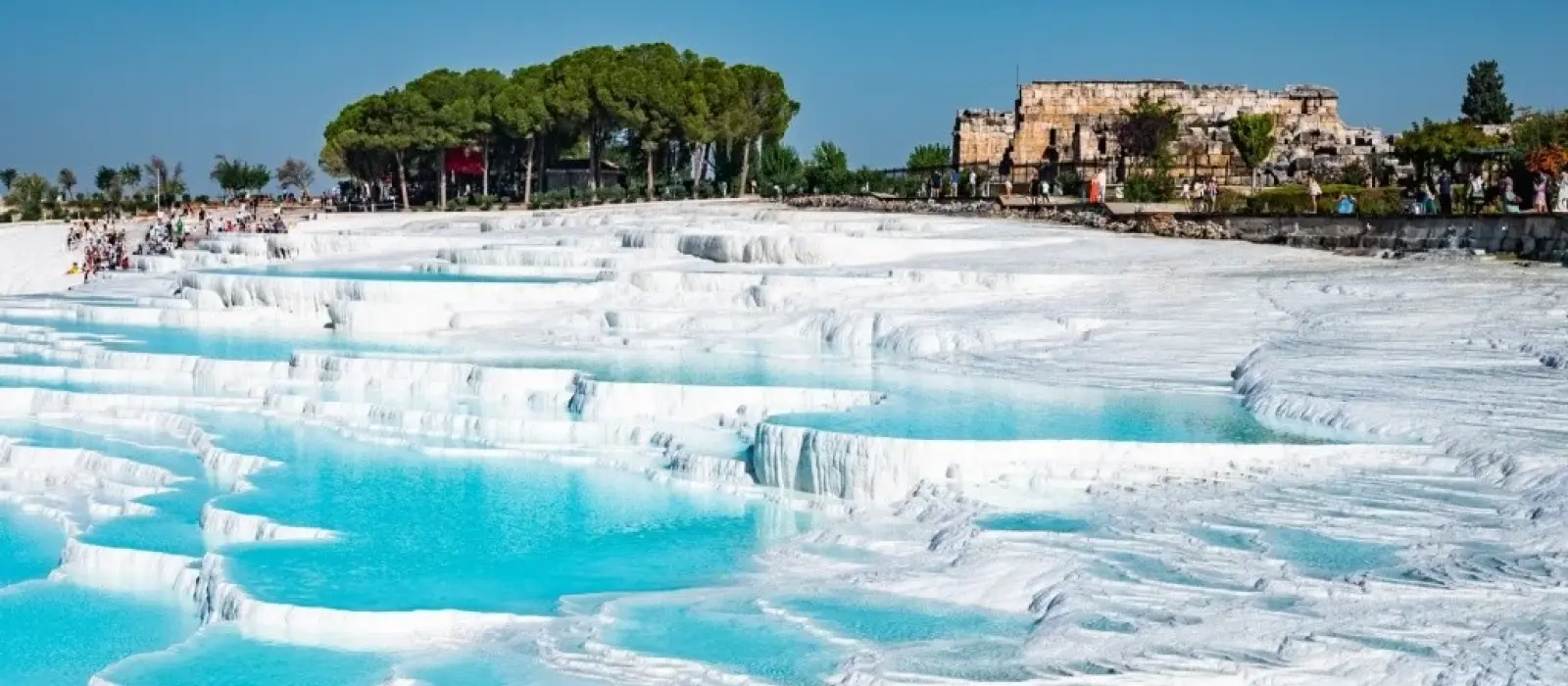
Hierapolis was a Greco-Roman spa city founded in the 2nd century BC, built directly above the hot mineral springs that also created Pamukkale's white travertine terraces below it. The two sites share a single entrance and a single ticket, so most people treat them as one visit: the ruins on top, the terraces spilling down the hillside. Romans came here for the warm, mineral-rich water, and the city grew into a religious and healing center over the centuries, changing hands and rebuilding after earthquakes more than once.
What survives is a lot to walk through. The large theater, cut into the slope, is one of the best-preserved parts and looks out over the valley. There are Roman streets, monumental gates, and the remains of bath complexes, plus one of the largest ancient necropolises in Asia Minor, a spread of tombs and sarcophagi on the edge of the city. An on-site museum, housed in a former Roman bath, holds statues and finds from the area. The Antique Pool, sometimes called Cleopatra's Pool, lets you swim among submerged column fragments for a separate paid entry that isn't part of standard admission.
Wear shoes you can walk a long way in, and note that you go barefoot on the travertines themselves to protect the surface, so the terraces can be slippery. There's little shade across the site, so a hat, water, and sun cover help in summer. The white terraces reflect a lot of light and glare, which is worth planning for around midday. Late afternoon tends to be cooler and better for photos, and an audio guide is a straightforward way to make sense of what you're looking at if you're going without a guide.