Hagia Sophia & Topkapi Palace Combo Tickets with Audio Guide
KTLY628358 · Istanbul
Audio Guide
Turkish, English, German, Spanish, Italian, Russian, Arabic, Chinese
Free Cancellation
Cancel up to 24 Hours before departure

About this tour

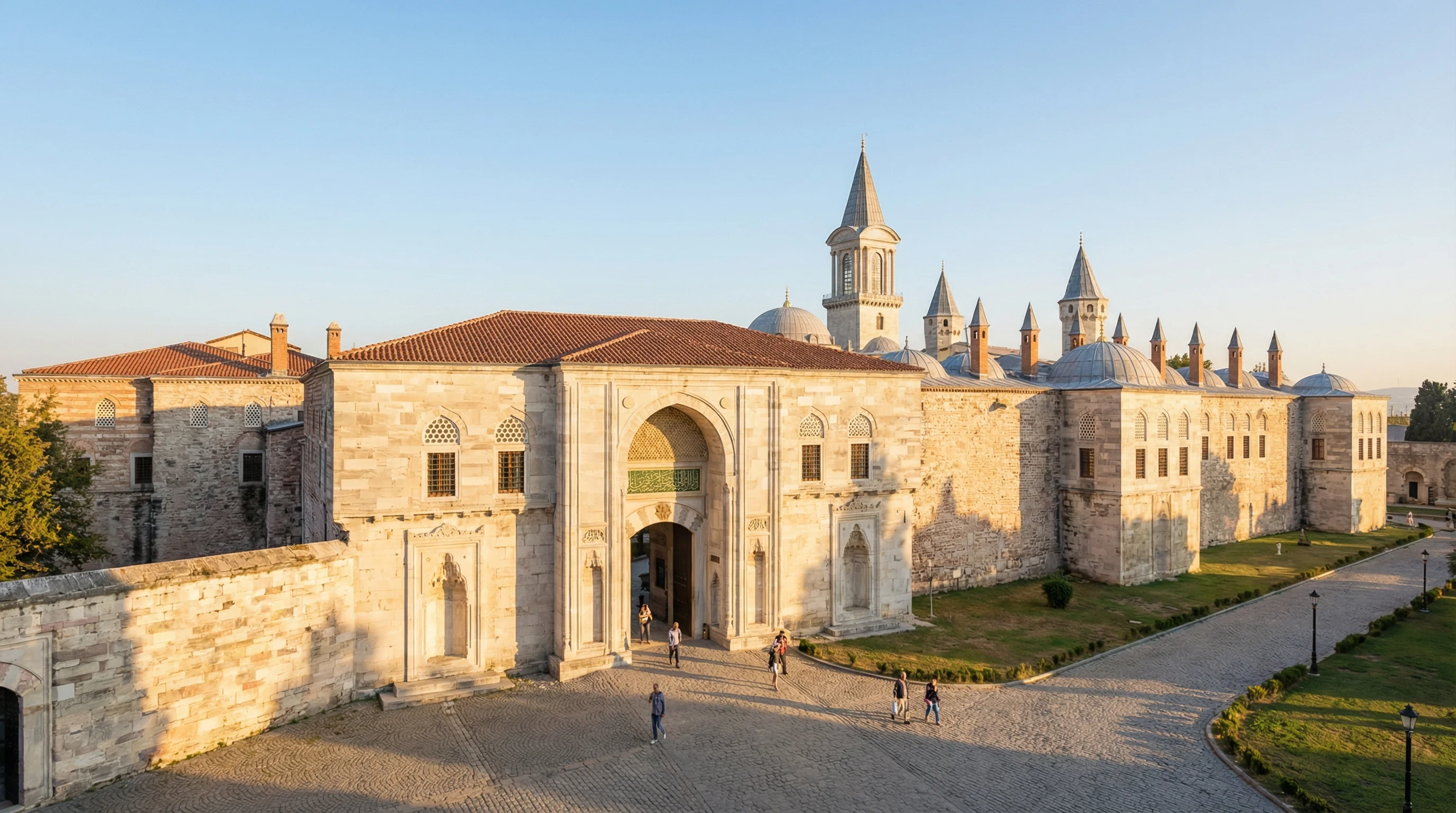
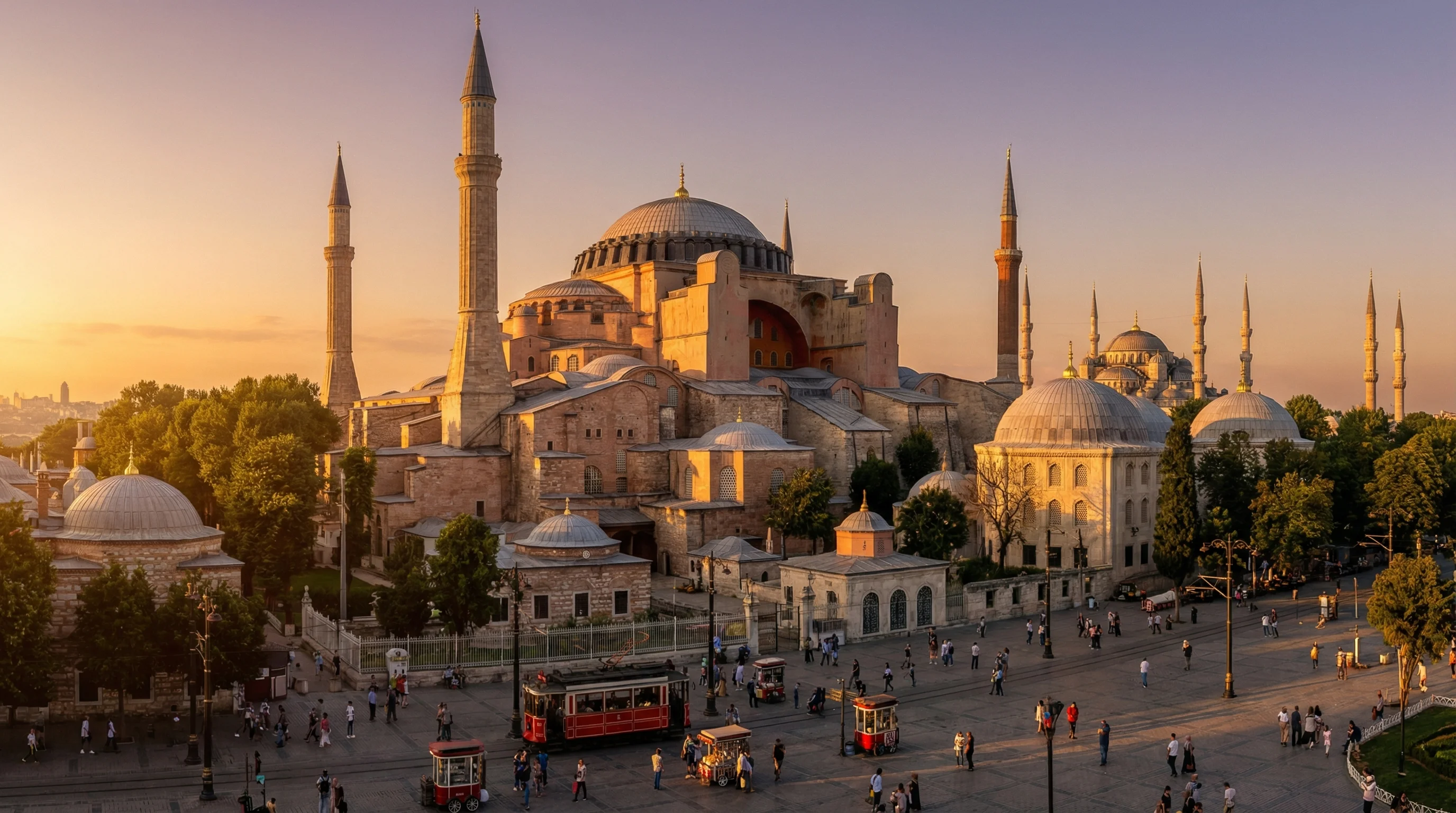
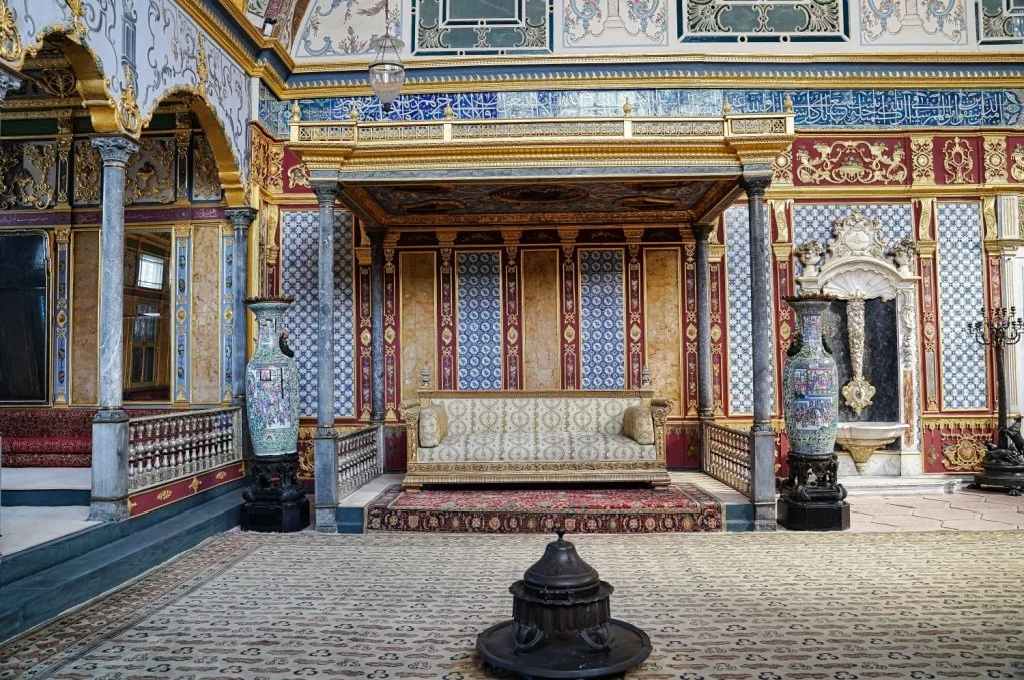
Two of Istanbul's most famous landmarks on one combo ticket, with skip-the-line entry to both. At Topkapi Palace, the Ottoman sultans' longtime residence, your ticket includes the Harem along with the Treasury, the Holy Relics, and courtyards that look out over the Bosphorus. Across Sultanahmet Square, Hagia Sophia lets you into the Upper Gallery, where Byzantine mosaics and Islamic calligraphy share the same enormous domed space. An audio guide comes with both, available in nine languages.

Audio Guide Languages
Turkish English German Spanish Italian Russian Arabic Chinese

Highlights

  • Walk through the Harem, the private living quarters of the Sultan and his family
  • See jewels, ceremonial weapons, and imperial artifacts in the Treasury
  • Stroll the palace courtyards and gardens overlooking the Bosphorus
  • View sacred Islamic relics in the Holy Relics Chamber
  • Take in the hand-painted Iznik tiles and Ottoman architecture across the complex
  • See how Byzantine and Ottoman design meet under one roof at Hagia Sophia
  • Stand beneath the vast central dome, a landmark of early engineering
  • Find Byzantine mosaics and Islamic calligraphy side by side in the same hall
  • Feel the atmosphere of a working mosque still open to worshippers and visitors

Included / Excluded

  • Skip-the-line entry to Topkapi Palace
  • Harem Museum access
  • Audio guide in English, German, Russian, Italian, Spanish, Polish, Arabic, Chinese, and Turkish
  • Skip-the-line entry to Hagia Sophia
  • Access to Hagia Sophia's Upper Gallery visitor area
  • Audio guide in English, German, Russian, Italian, Spanish, Polish, Arabic, Chinese, and Turkish

Opening Hours and Dress Code for Both Sites

Topkapi Palace is open every day except Tuesdays. From April 1 to October 1 the hours are 09:00 to 18:00, and from October 1 to April 1 they shift to 09:00 to 17:00, with last entry 30 minutes before closing. The palace is also closed on the first day of Eid al-Fitr. There is no formal dress code here, though light, modest clothing makes sense if you're pairing the visit with Hagia Sophia or the Blue Mosque nearby, and comfortable shoes help since there is a lot of walking across the grounds.

Hagia Sophia is open daily from 09:00 to 19:00, with last entry at 18:30. Because it is a working mosque, it closes to tourists during the five daily prayers, each lasting roughly 75 to 90 minutes, and for the main weekly prayer on Fridays from 12:30 to 14:30; time your visit around those windows. A modest dress code applies to everyone. Women should cover shoulders and arms, wear a skirt at least knee length or full-length trousers, and put on a headscarf inside; men need full-length trousers or knee-length shorts, and no sleeveless tops. The rules are relaxed for children under eight.

Available Days / Times

  • Monday
  • Tuesday
  • Wednesday
  • Thursday
  • Friday
  • Saturday
  • Sunday
From
145.49€
Book Now

Important Information

  • Allow two to three hours for the palace, including the Harem and Treasury
  • Everyone passes through security screening, which can take up to 30 minutes in high season even with a pre-booked ticket
  • Wear comfortable shoes; the complex has uneven stone paths, courtyards, and stairs
  • Booking online ahead of time lets you skip the long ticket-purchase lines, especially in peak months
  • Check what your ticket covers; the Harem needs a separate ticket and shows the sultans' private life
  • A combo ticket saves time and money since Hagia Sophia and the Basilica Cistern are within walking distance
  • A guided tour or audio guide helps explain the palace's history, architecture, and imperial collections
  • Hagia Sophia is a working mosque, so dress respectfully (see dress code)
  • Visitor tickets cover the Upper Gallery only; the ground-floor prayer hall is for worshippers and not part of the standard visit
  • Hagia Sophia closes to tourists during the five daily prayers and the Friday midday prayer, so plan around those times
  • Security checks apply at entry; lines can reach 60 minutes in high season, June to August
  • Set aside at least one to two hours for Hagia Sophia
  • A guided tour or audio guide adds context on the history, symbolism, and artwork
  • Ongoing conservation work means parts of the interior may be behind scaffolding
  • Combo tickets are worth considering for nearby sites like the Basilica Cistern and Topkapi Palace
  • No eating or drinking in the exhibition rooms
  • Photos are fine in outdoor courtyards and most areas, but no flash, and no photography in the Treasury or Sacred Relics rooms
  • Do not touch or climb on the exhibits
  • No smoking inside the palace buildings
  • Follow instructions from museum staff and security
  • Dress modestly, covering shoulders and knees (see dress code)
  • Remove your shoes before the prayer area; use the racks provided or carry them in a small plastic bag
  • Keep quiet and respectful inside the mosque
  • Photography is generally allowed, but no flash
  • Follow instructions from mosque staff and guides

FAQs

What is Topkapi Palace?
Topkapi Palace is a historic palace museum in Istanbul that served as the main administrative center and royal residence of the Ottoman sultans for centuries. Today, Topkapi Palace preserves imperial courtyards, state rooms, and collections that reflect the political, ceremonial, and private life of the Ottoman court.
Where is Topkapi Palace located?
Topkapi Palace is located in Istanbul’s historic Sultanahmet district, on a promontory overlooking the Bosphorus, the Golden Horn, and the Sea of Marmara. The central location places Topkapi Palace within walking distance of Hagia Sophia and the Blue Mosque.
Who built Topkapi Palace?
Topkapi Palace was built by Sultan Mehmed II (Mehmed the Conqueror) in the 15th century, shortly after the Ottoman conquest of Constantinople, and was expanded by successive sultans over time.
How much time should I allocate for a visit to Topkapi Palace?
The average visit duration is approximately 2 to 3 hours to see the main highlights.
What is the Topkapi Palace entrance fee?
The Topkapi Palace entrance fee varies depending on the ticket type, such as standard admission, guided tours, or combination tickets that include nearby attractions. Prices can change by season and ticket inclusions, so it is best to refer to the Topkapi Palace tickets listed on this page for the most up-to-date options and current prices.
Where to buy Topkapi Palace tickets?
Topkapi Palace tickets can be purchased online or on-site, but booking Topkapi Palace tickets online through our site allows you to compare options such as standard entry, guided tours, skip-the-line tickets, combo tickets, and city passes, helping you find the best deal for your visit.
Are guided tours available at Topkapi Palace?
Yes, guided tours at Topkapi Palace are available and offer deeper insight into the palace’s history, key sections, and imperial life. You can explore top-rated guided tour options and current availability on our site.
Are tickets to Topkapi Palace available online?
Yes, Topkapi Palace tickets are available online, allowing visitors to secure entry in advance. Booking through our site gives access to verified tickets, different ticket types, and special deals.
Can I buy skip-the-line tickets for Topkapi Palace?
Yes, skip-the-line tickets for Topkapi Palace are available and help save time by avoiding ticket-purchase queues. Our site also offers money-saving combo tickets and city passes that include Topkapi Palace and nearby attractions.
What is Hagia Sophia?
Hagia Sophia is one of Istanbul’s most iconic landmarks, originally built as a Byzantine cathedral, later converted into an imperial mosque, and today functioning as an active mosque and historic monument. It is renowned for its massive dome, layered history, and unique blend of Christian and Islamic architectural elements.
When was Hagia Sophia built?
Hagia Sophia was constructed between 532 and 537 AD during the reign of Byzantine Emperor Justinian I. At the time of its completion, it was the largest cathedral in the world.
Who built Hagia Sophia?
Hagia Sophia was commissioned by Byzantine Emperor Justinian I as the principal cathedral of Constantinople and a symbol of imperial authority.
Who designed Hagia Sophia?
The structure was designed by two scholars and architects: Anthemius of Tralles and Isidore of Miletus. Their innovative engineering, particularly the dome, was groundbreaking for its time.
What does Hagia Sophia mean?
The name “Hagia Sophia” means “Holy Wisdom” in Greek. It refers to divine wisdom rather than a specific saint.
Why is Hagia Sophia important?
Hagia Sophia is important for its architectural innovation, historical significance, and cultural symbolism. It has served as a cathedral, mosque, museum, and mosque again, reflecting the complex religious and political history of Istanbul. Its dome influenced centuries of church and mosque architecture across both the Christian and Islamic worlds.
Where is Hagia Sophia located?
Hagia Sophia is located in Istanbul’s historic Sultanahmet district, directly opposite the Blue Mosque and within walking distance of major landmarks such as the Basilica Cistern and the Topkapi Palast.
Is Hagia Sophia free to visit?
Access to the main prayer hall of Hagia Sophia is free for Muslim worshippers attending prayer, as it functions as an active mosque. However, the designated visitor areas, including the Upper Gallery, require a ticket. On this page, you can review verified ticket options and available deals for access to the visitor areas.
Where can I buy Hagia Sophia tickets?
Tickets for the designated visitor areas of Hagia Sophia can be purchased online or on-site, subject to availability and current regulations. Booking online through this page allows you to compare verified ticket options, view inclusions, and access current deals, helping you plan your visit more easily, especially during busy periods.
How do you pronounce Hagia Sophia?
Hagia Sophia is commonly pronounced as “HAH-yuh soh-FEE-uh” in English. In Turkish, it is pronounced “Ayasofya.”