
Hagia Sophia Istanbul: Audio Guide & Visitor Entry Tickets
About this tour
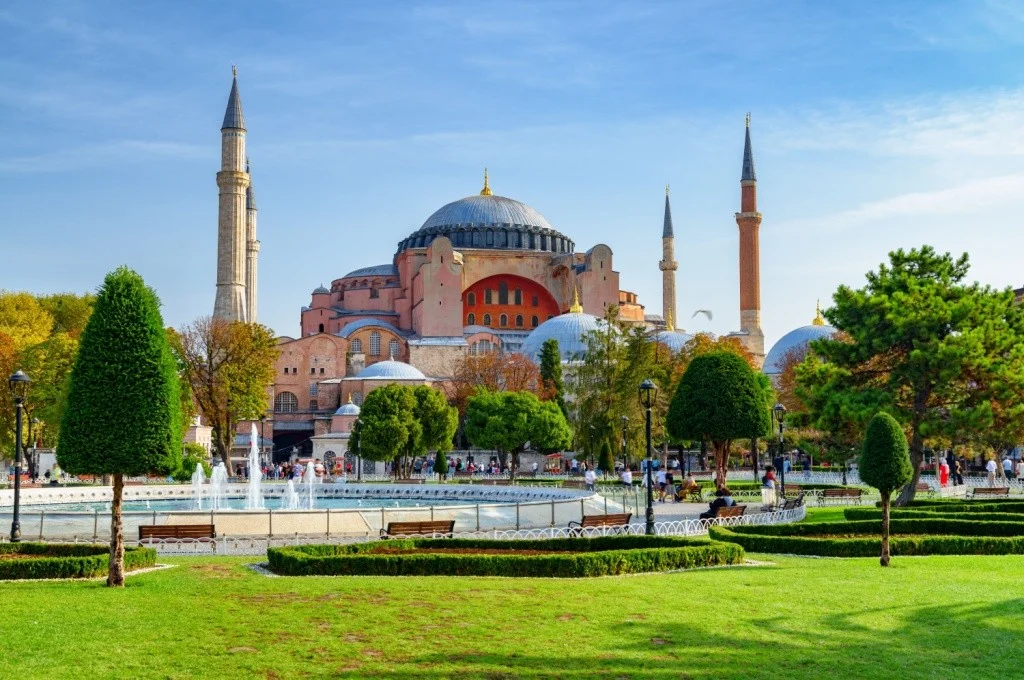
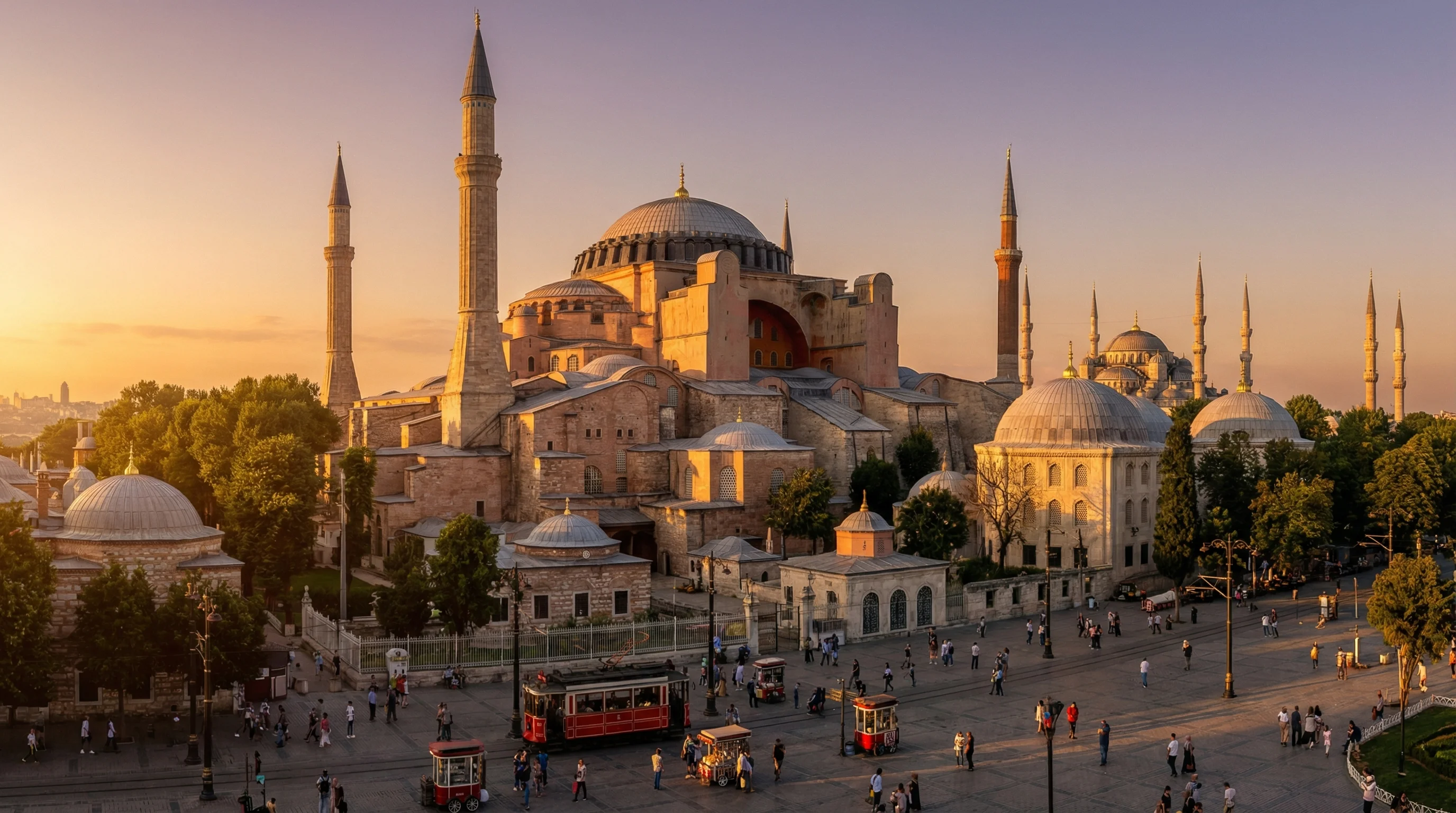
Hagia Sophia is Istanbul's most famous landmark, a former Byzantine cathedral that became an imperial mosque and still functions as one today. On this page you can compare verified ticket options with an audio guide and find current deals for the visitor areas, including the Upper Gallery. Inside you'll see the enormous central dome, Byzantine mosaics, and Islamic calligraphy sharing the same space. Plan around the daily prayer schedule, dress modestly, and set aside an hour or two to take it all in.
Highlights
- A building that reads as two eras at once, Byzantine and Ottoman, layered over centuries.
- The great central dome, an engineering leap that shaped domes for over a thousand years.
- Byzantine mosaics and Islamic calligraphy sharing the same walls.
- The atmosphere of a working mosque that still fills with worshippers between visitor hours.
Hagia Sophia: Hours, Prayer Times & Dress Code
Hagia Sophia is open daily from 09:00 to 19:00, with last entry at 18:30. Because it is a working mosque, visiting hours fall around the five daily Islamic prayers. During each prayer the building closes to tourists entirely, usually for about 75 to 90 minutes. The longest closure is Friday from 12:30 to 14:30, when the space is reserved for the main weekly prayer, so plan to visit at other times of day.
A modest dress code applies to everyone. Women should wear a knee-length or longer skirt or full-length trousers, cover their shoulders and arms, and put on a headscarf inside. Men need full-length trousers or knee-length shorts; sleeveless shirts are not allowed. The rules are more relaxed for children under eight.
Available Days / Times
- Monday
- Tuesday
- Wednesday
- Thursday
- Friday
- Saturday
- Sunday
Important Information
- Active mosque, so dress respectfully (see dress code).
- Visitor tickets cover the Upper Gallery only; the ground-floor prayer hall is for worshippers and not part of the standard visit.
- Closed to tourists during the five daily prayers and Friday midday prayer; visit outside those windows.
- Security screening at entry; lines can reach 60 minutes in high season (June to August).
- Allow 1 to 2 hours to take in the architecture and history.
- A guided tour or audio guide helps make sense of the history, symbolism, and artwork.
- Ongoing conservation work means parts of the interior may be behind scaffolding.
- Combo tickets save time and money if you also plan to see the Basilica Cistern and Topkapi Palace nearby.
- Cover shoulders and knees (see dress code).
- Take off your shoes before the prayer area; use the racks provided or carry them in a small plastic bag.
- Keep quiet and respectful inside the mosque.
- Photos are usually fine, but no flash.
- Follow directions from mosque staff and guides.