This combo ticket bundles priority entry to two of Istanbul's landmark sites, Hagia Sophia and the Basilica Cistern, plus an audio guide for each and for the Blue Mosque (which is free to enter on its own). You pick the day and visit whenever you like within it, so there's no fixed start time to work around. Everything arrives as a digital ticket by email, and buying ahead lets you walk past the long lines that build up at the ticket windows.
Highlights
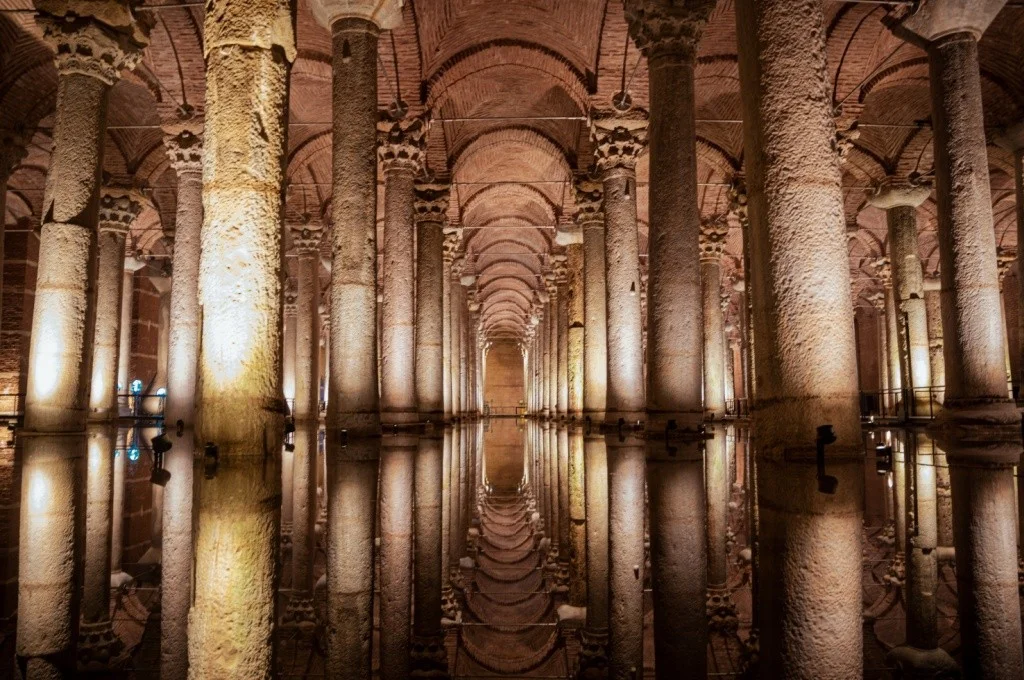
Walk among the Basilica Cistern's forest of marble columns, each carved differently
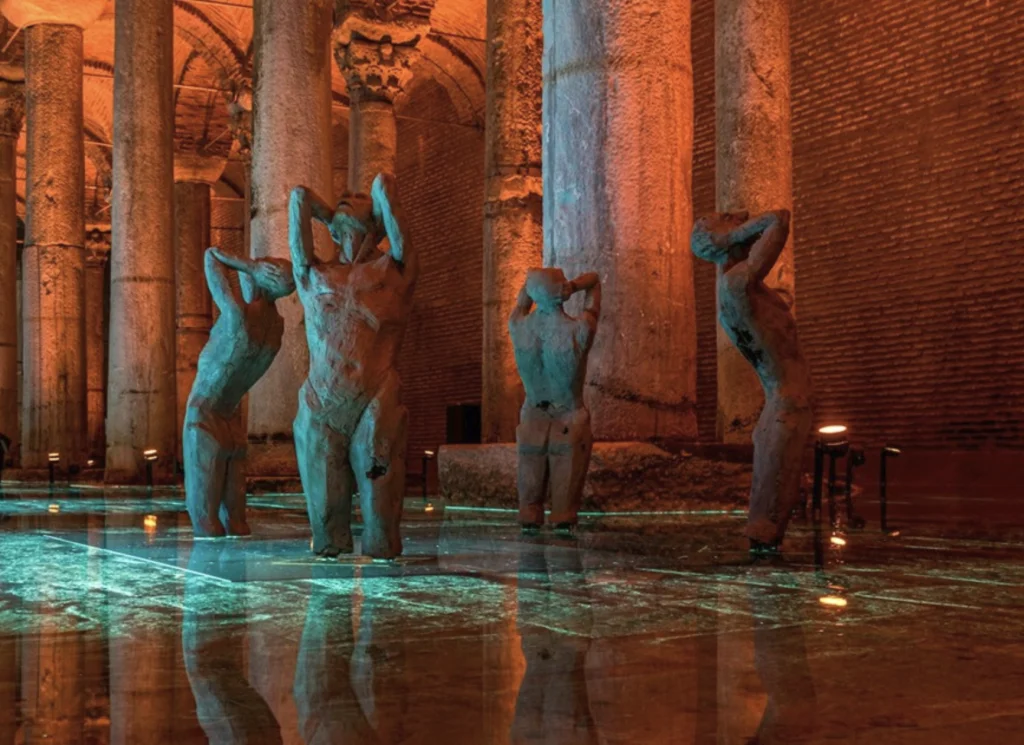
See the two carved Medusa heads set as column bases, still unexplained
Take in the mix of still water, low light and 6th-century stonework underground
Learn how the cistern supplied water to the Great Palace of Constantinople
Step down into a cool, quiet break from the busy streets above
See where Byzantine and Ottoman design meet inside Hagia Sophia
Stand under Hagia Sophia's central dome, an engineering leap for its era
Find Christian mosaics and Islamic calligraphy sharing the same walls
Feel the atmosphere of two working mosques still open to worshippers and visitors
Look closely at the Blue Mosque's 20,000-plus blue Iznik tiles that give it its name
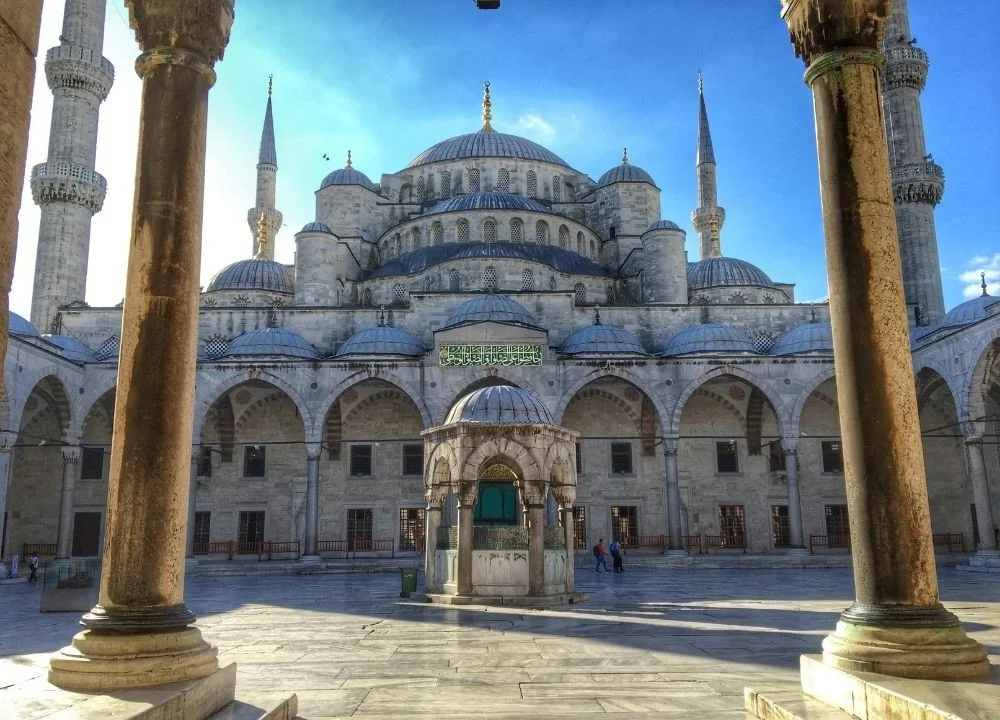
Spot the six slender minarets that make the Blue Mosque unmistakable on the skyline
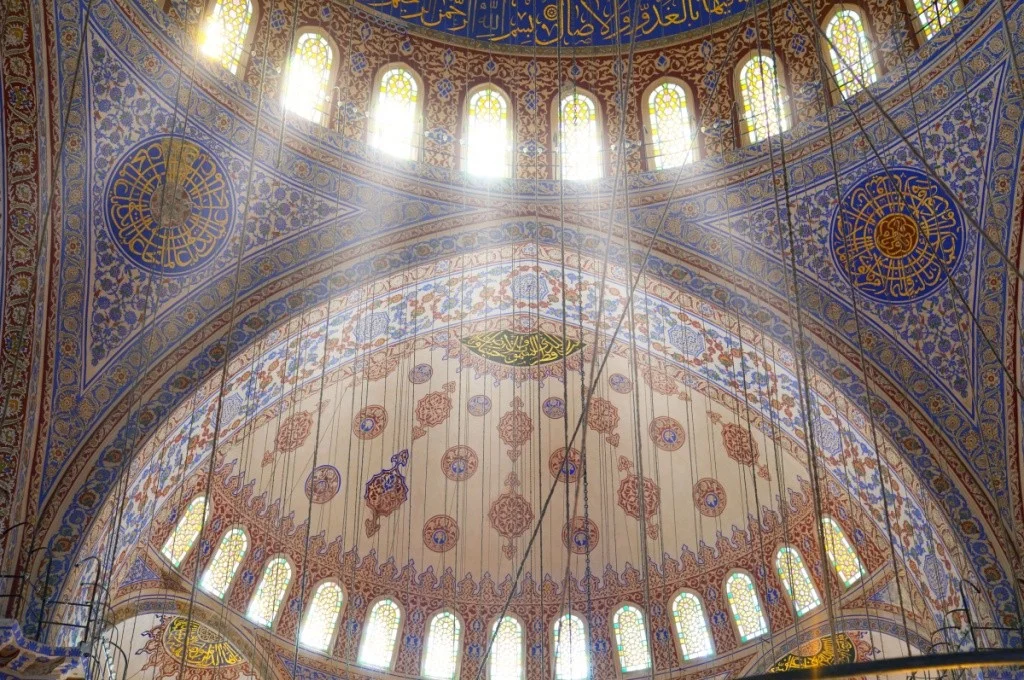
Enter the wide prayer hall lit by stained glass and lined with calligraphy
Experience the calm and contemplative atmosphere of an active place of worship that continues to welcome worshippers daily.
Trace the cascade of domes and half-domes drawing the eye upward
Count more than 200 stained glass windows softening the daylight inside
Included / Excluded
Priority entry to Hagia Sophia
Priority entry to the Basilica Cistern
Audio guide for Hagia Sophia
Audio guide for the Basilica Cistern
Audio guide for the Blue Mosque (entry is free)
Flexible timing: visit any time on your chosen day
Digital tickets emailed straight to you
Good to Know: Hours & Dress Code for All Three Sites
The Basilica Cistern runs two separate sessions each day. The daytime session is 09:00 to 18:30, then the site closes briefly and reopens for an evening session from 19:30 to 22:00 with different lighting and a calmer feel. It stays shut between 18:30 and 19:30, and a daytime ticket does not cover the evening session. There is no dress code here, though comfortable clothes and sturdy shoes help with the damp, uneven floors. If you're heading to Hagia Sophia or the Blue Mosque the same day, dress modestly so you're ready for both.
Hagia Sophia is open 09:00 to 19:00 daily, last entry 18:30. As a working mosque it closes to visitors during each of the five daily prayers, usually for 75 to 90 minutes, and for the main Friday prayer from 12:30 to 14:30. Modest dress is required: women wear a skirt or trousers to at least knee length, cover shoulders and arms, and put on a headscarf inside; men wear long trousers or knee-length shorts, no sleeveless shirts. The rules ease up for children under eight.
The Blue Mosque opens daily, with seasonal hours. From April 1 to September 30 it's 08:30 to 19:00; from October 1 to March 31 it's 08:30 to 17:00, with last entry 30 minutes before closing. It also closes for the five daily prayers, about 90 minutes each, and on Friday mornings until 14:30 for Jumu'ah. The same modest dress code applies as at Hagia Sophia, again relaxed for children under eight.
Buying tickets online is highly recommended, as long queues often form in front of the ticket office.
Floors and walkways can be slippery due to constant moisture, so comfortable, non-slip shoes are strongly recommended.
Humidity levels reach around 96%, and water may drip from the ceiling in some areas.
Lighting is intentionally subdued to enhance the atmosphere; please move carefully, especially on stairs and narrow walkways.
Photography is allowed, but the use of flash is discouraged to protect the site and visitor experience.
Night Shift visits (19:30–22:00) require a separate ticket and offer a quieter, more atmospheric experience.
Note that it tends to be cooler inside, so consider dressing accordingly.
Combo tickets are a convenient option and can save time and money, especially when visiting nearby attractions such as Hagia Sophia and the Topkapi Palace.
As an active mosque, visitors are expected to dress respectfully (see dress code).
Visitor tickets provide access to the Visiting Area (Upper Gallery); the main prayer hall on the ground level is reserved for worshippers and is not included in standard tourist visits.
The mosque is fully closed to tourists during daily prayer times and on Fridays during the main weekly prayer. Visiting outside these hours is strongly recommended.
Security checks are required at entry; waiting times can take up to 60 minutes during high season (June to August).
It's advisable to allocate at least 1-2 hours for your visit to fully appreciate the architecture and historical significance.
Guided tours or audio guides are recommended for deeper insight into the history, symbolism, and artistic details.
Due to ongoing conservation and renovation work, some interior sections may be partially obscured by scaffolding.
Combo tickets are a practical option and can save time and money when visiting nearby landmarks such as the Basilica Cistern and the Topkapi Palace.
As an active place of worship, visitors are expected to behave respectfully and dress modestly (see dress code).
Be aware of prayer times, as the mosque is closed to tourists during these periods. Check the daily prayer schedule in advance to plan your visit accordingly.
Blue Mosque Guided tours are highly recommended and can enhance your understanding of the mosque's history and significance.
All visitors must pass through a security screening, which can take up to 30 minutes during peak periods.
Combo tours are a convenient option, allowing you to visit nearby landmarks such as Hagia Sophia and the Basilica Cistern as part of one experience.
The Blue Mosque is free to enter, but donations are welcome.
Allow ample time to explore the mosque and its surroundings, as there is much to see and appreciate.
Large luggage and suitcases are not permitted inside the Basilica Cistern.
Food and beverages are not allowed inside the site.The use of tripods is not allowed without prior authorization.
Smoking is strictly prohibited, including electronic cigarettes.
Pets are not permitted within the cistern.
Payments are accepted in Turkish Lira and by credit card only; foreign currency is not accepted.
Dress modestly, covering shoulders and knees (see dress code).
Remove your shoes before entering the prayer area. Visitors may leave them on the designated racks or bring a small plastic bag to carry them during their visit.
Maintain a quiet and respectful demeanor inside the mosque
Photography is generally allowed, but avoid using flash.
Follow the instructions of the mosque staff and guides.
Remove your shoes before entering; use the designated racks or bring a small bag to carry them.
Entry is restricted during the five daily prayer times and during Friday prayers.
Maintain silence and behave respectfully inside the mosque.
Photography is permitted, but flash photography should be avoided.
Eating and drinking are not allowed inside the mosque.
FAQs
What is the Basilica Cistern?
The Basilica Cistern is an ancient underground water reservoir in Istanbul, built in the 6th century during the reign of Byzantine Emperor Justinian I. It was designed to store and supply water to the Great Palace of Constantinople and nearby buildings. Today, it is one of the city’s most atmospheric historical landmarks, known for its vast columns, subdued lighting, and iconic Medusa heads.
Is the Basilica Cistern free to visit?
No, the Basilica Cistern is not free to visit. As a protected historical site and museum, entry requires a paid ticket. Purchasing tickets in advance is recommended, especially during peak hours and weekends, to ensure smooth access.
Do you need tickets for the Basilica Cistern?
Yes, tickets are required to enter the Basilica Cistern. Entry is controlled to manage visitor numbers and preserve the site. Verified tickets can be purchased online on this page, which allows you to check availability in advance and avoid long queues at the entrance.
How long does it take to visit the Basilica Cistern in Istanbul?
A typical visit to the Basilica Cistern takes around 30 minutes to 1 hour. Visitors who take their time, use an audio guide, or join a guided tour may spend slightly longer exploring the details and atmosphere.
How much are tickets to the Basilica Cistern Istanbul?
Ticket prices for the Basilica Cistern vary depending on the ticket type, such as standard entry, skip-the-line access, tickets with audio guide, guided tours, or combo tickets that include nearby attractions. Prices may also change seasonally. For the most accurate and up-to-date pricing, it is best to check the verified ticket options listed on this page.
How much water would the Basilica Cistern hold?
The Basilica Cistern was capable of holding approximately 80,000 cubic meters of water. This large capacity ensured a reliable water supply for the imperial palace complex and surrounding areas during the Byzantine period.
How should I visit the Basilica Cistern Istanbul?
To fully appreciate the history, architecture, and legends of the Basilica Cistern, a guided tour or audio guide is highly recommended. These options help ensure you do not miss important details and provide deeper insight into the building’s myths, symbolism, and historical function. Both guided and audio-guided visit options are available with verified tickets on this page.
What is Hagia Sophia?
Hagia Sophia is one of Istanbul’s most iconic landmarks, originally built as a Byzantine cathedral, later converted into an imperial mosque, and today functioning as an active mosque and historic monument. It is renowned for its massive dome, layered history, and unique blend of Christian and Islamic architectural elements.
When was Hagia Sophia built?
Hagia Sophia was constructed between 532 and 537 AD during the reign of Byzantine Emperor Justinian I. At the time of its completion, it was the largest cathedral in the world.
Who built Hagia Sophia?
Hagia Sophia was commissioned by Byzantine Emperor Justinian I as the principal cathedral of Constantinople and a symbol of imperial authority.
Who designed Hagia Sophia?
The structure was designed by two scholars and architects: Anthemius of Tralles and Isidore of Miletus. Their innovative engineering, particularly the dome, was groundbreaking for its time.
What does Hagia Sophia mean?
The name “Hagia Sophia” means “Holy Wisdom” in Greek. It refers to divine wisdom rather than a specific saint.
Why is Hagia Sophia important?
Hagia Sophia is important for its architectural innovation, historical significance, and cultural symbolism. It has served as a cathedral, mosque, museum, and mosque again, reflecting the complex religious and political history of Istanbul. Its dome influenced centuries of church and mosque architecture across both the Christian and Islamic worlds.
Where is Hagia Sophia located?
Hagia Sophia is located in Istanbul’s historic Sultanahmet district, directly opposite the Blue Mosque and within walking distance of major landmarks such as the Basilica Cistern and the Topkapi Palast.
Is Hagia Sophia free to visit?
Access to the main prayer hall of Hagia Sophia is free for Muslim worshippers attending prayer, as it functions as an active mosque. However, the designated visitor areas, including the Upper Gallery, require a ticket. On this page, you can review verified ticket options and available deals for access to the visitor areas.
Where can I buy Hagia Sophia tickets?
Tickets for the designated visitor areas of Hagia Sophia can be purchased online or on-site, subject to availability and current regulations. Booking online through this page allows you to compare verified ticket options, view inclusions, and access current deals, helping you plan your visit more easily, especially during busy periods.
How do you pronounce Hagia Sophia?
Hagia Sophia is commonly pronounced as “HAH-yuh soh-FEE-uh” in English. In Turkish, it is pronounced “Ayasofya.”
Where can I buy Blue Mosque tickets online?
While there is no entrance fee to the Blue Mosque, guided tours, combo packages with nearby attractions and Istanbul city passes can be booked online. On this page, you can explore official guided tour options and combined experiences, helping you plan your visit more conveniently.
Are guided tours available at the Blue Mosque?
Yes, Blue Mosque tours are available and can greatly enhance your understanding of the Blue Mosque’s history, architecture, and religious significance. Booking in advance is recommended to secure your spot. On this page you can find guided tour options with verified guides and clear meeting details.
How long should I spend at the Blue Mosque?
Most visitors spend around 30 to 45 minutes inside the Blue Mosque. If you plan to join a guided tour or explore the surrounding courtyard and square, you may want to allow additional time.
How much is the ticket for the Blue Mosque?
There is no entrance fee for the Blue Mosque. Tickets are only required for guided tours or combo passes that include nearby attractions such as Hagia Sophia and the Basilica Cistern. On this page, you can find attractive guided tour options and combo experiences offered with verified guides.
What is the Blue Mosque?
The Blue Mosque, officially known as the Sultan Ahmed Mosque, is one of Istanbul’s most famous landmarks and an active place of worship. It is renowned for its elegant domes, six minarets, and interior decorated with over 20,000 blue Iznik tiles. Today, it welcomes both worshippers and visitors from around the world.
Where is the Blue Mosque located in Istanbul, Turkey?
The Blue Mosque is located in Istanbul’s historic Sultanahmet district, directly opposite Hagia Sophia. Its central location places it within walking distance of other major attractions such as the Basilica Cistern and the Topkapi Palace.
When was the Blue Mosque built?
Construction of the Blue Mosque began in 1609 and was completed in 1616 during the reign of Sultan Ahmed I. It was built to rival the grandeur of Hagia Sophia and to serve as a major imperial mosque of the Ottoman Empire.
Is entry to the Blue Mosque free?
Yes, entry to the Blue Mosque is free, as it is an active mosque. Visitors are welcome outside of prayer times. Voluntary donations are accepted to help support the maintenance of the site.
Are the Blue Mosque and Hagia Sophia the same?
No, the Blue Mosque and Hagia Sophia are two separate landmarks located opposite each other in Sultanahmet Square. While both are iconic religious monuments, Hagia Sophia has served as a cathedral, mosque, and museum over its history, whereas the Blue Mosque has always functioned as a mosque.
Do you need tickets for the Blue Mosque?
No ticket is required to enter the Blue Mosque itself. However, guided tours do require booking and are recommended for visitors who want deeper insight into the mosque’s history, architecture, and religious significance.